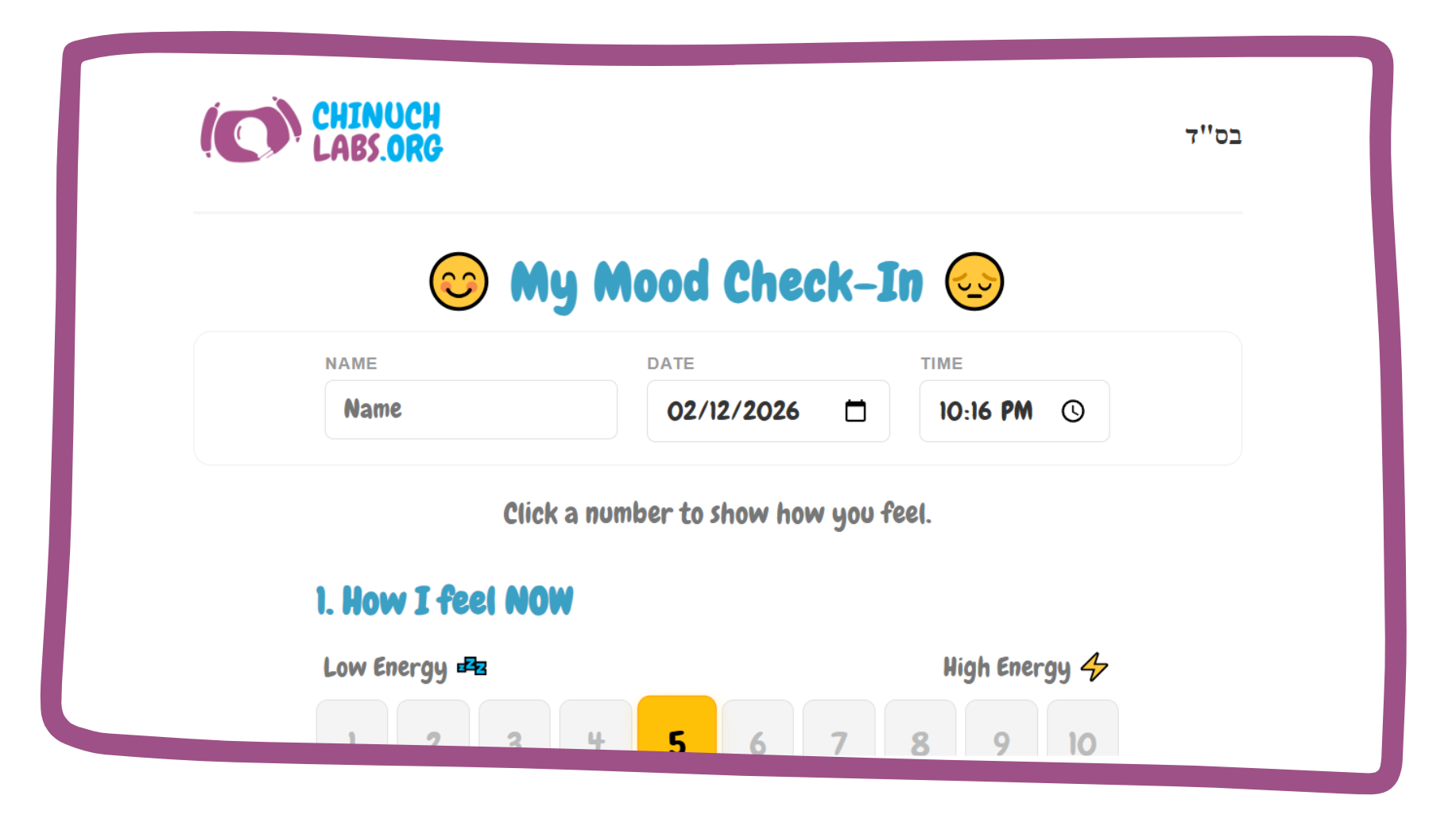
Empowering Kids Through Emotional Awareness
Children often feel “big emotions” without having the vocabulary or cognitive tools to process them. When a child is overwhelmed, their “Dog Brain” (the amygdala) takes over, triggering a fight-or-flight response. (See this post to understand more).
To help children return to a state of calm, we must teach them how to identify their internal state and engage their “Top Brain” (the prefrontal cortex). These initial logs are designed to facilitate that transition.
Step 1: Identifying the Feeling
The “How Do I Feel?” chart (Page 1) provides a diverse range of visual emojis—from “Content” and “Silly” to “Hurt” and “Confused”.
- Why it works: Labeling an emotion reduces its power. By picking an icon that matches their internal state, children begin the process of self-regulation.
Step 2: Monitoring Energy & Mood
The “Energy Level” tracker (Page 2) helps children see the connection between their physical energy and their emotional state.
- The Goal: Helping a child recognize if they are “Sleepy” vs. “High Energy” allows them to choose the right path toward calm. For example, a high-energy “Angry” child might need movement, while a low-energy “Sad” child might need a quiet conversation.
What’s Next?
Identifying the feeling is just the beginning. Once a child knows how they feel, they need concrete ways to shift their energy.
- To see specific activities that shift energy away from the “Dog Brain,” check out our Top Brain Ideas post, which covers the next two pages of this log.
- To learn more about the science behind these reactions, visit our Using Brain States to Calm Down post.
How to Use These Pages Today:
- Daily Check-ins: Use the “How Do I Feel?” page every morning or after school to normalize talking about emotions.
- Energy Awareness: When you notice a shift in a child’s behavior, point to the “Energy Level” chart to help them identify if they are feeling “High Energy” or “Sleepy”.
We have a PDF or digital version of this activity:
